
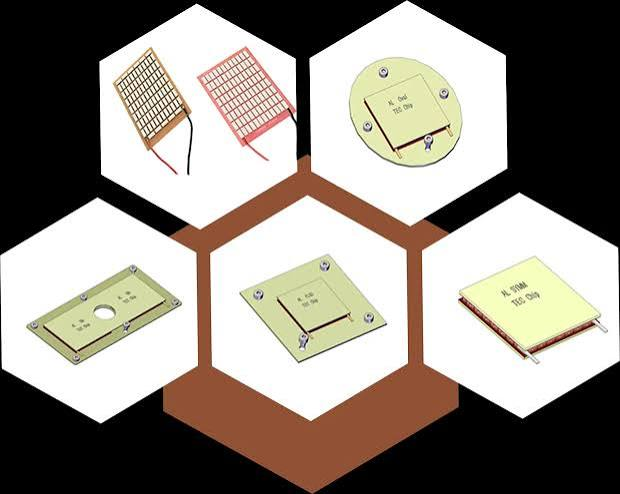
Temperature control is an essential requirement in many modern technologies. From medical instruments and laboratory equipment to telecommunications, electronics, and consumer devices, maintaining a stable temperature can directly affect performance, reliability, and TEC Chip Supplier product life. One technology that has become increasingly valuable for precise temperature regulation is the thermoelectric cooler, commonly known as a TEC chip. These compact semiconductor devices provide efficient heating and cooling without traditional compressors or refrigerants.
A TEC chip works by using the thermoelectric effect to transfer heat from one side of the device to another. When electrical current passes through the semiconductor elements inside the chip, one surface becomes cold while the opposite surface becomes hot. By controlling the direction and amount of electrical current, engineers can achieve accurate temperature regulation for sensitive components and systems.
Understanding TEC Chip Technology
A TEC chip is a solid-state temperature-control device consisting primarily of semiconductor materials positioned between ceramic plates. The semiconductor elements are typically arranged in pairs and connected electrically so that heat can be moved in a controlled direction.
Unlike conventional cooling systems that depend on mechanical movement, TEC chips have no compressors, fans, or refrigerants inside the module itself. This makes them compact and mechanically reliable. Their ability to provide both cooling and heating also makes them useful when a system needs to maintain a specific temperature rather than simply reduce heat.
The basic operating principle is based on the Peltier effect. When direct current flows through the semiconductor elements, heat is absorbed on one side and released on the other. Reversing the electrical polarity reverses the direction of heat transfer. This simple principle provides engineers with a practical method for precise thermal management.
How TEC Chips Control Temperature
The main advantage of TEC technology is its ability to regulate temperature with a high degree of precision. A suitable control circuit can adjust the current supplied to the TEC chip according to temperature sensor feedback.
For example, a temperature sensor can continuously measure the temperature of a laser diode or electronic component. If the temperature rises above the desired level, the controller can increase cooling through the TEC chip. If the temperature becomes too low, the current can be adjusted or reversed to provide heating.
This closed-loop approach allows systems to maintain stable operating conditions. It is particularly useful for applications where even small temperature changes can influence accuracy or performance.
Efficient Cooling Without Moving Parts
One of the key reasons TEC chips are used for temperature control is their solid-state construction. Traditional refrigeration systems often contain moving components such as compressors and mechanical fans. These components can produce vibration, noise, and mechanical wear.
TEC chips operate without these moving parts. As a result, they can provide quiet and vibration-free cooling. This characteristic is especially important for precision instruments, optical systems, scientific equipment, and other applications where vibration can interfere with measurements.
Their compact structure also allows TEC chips to be installed in devices where conventional cooling equipment would be too large or complicated.
Importance of Proper Heat Dissipation
Although a TEC chip can transfer heat efficiently, the hot side of the module must be managed correctly. The heat removed from the cold side, combined with the electrical energy supplied to the TEC, is released on the hot side.
If this heat is not removed effectively, the temperature difference across the TEC can decrease, reducing cooling performance. Therefore, TEC systems commonly use heat sinks, fans, liquid cooling systems, or other thermal-management solutions to remove heat from the hot surface.
The quality of the thermal interface between the TEC chip and its heat sink is also important. Proper mounting pressure and suitable thermal interface materials can help improve heat transfer and overall system efficiency.
Applications of TEC Chips
TEC chips are used in a wide variety of industries because of their precise temperature-control capabilities. In optical communication systems, for example, TEC technology can help maintain the operating temperature of laser components. Stable temperature conditions can improve wavelength stability and support consistent optical performance.
In medical and laboratory equipment, TEC chips can provide controlled cooling for sensors, detectors, sample containers, and analytical instruments. Maintaining a specific temperature can be important for accurate measurements and reliable operation.
Consumer electronics can also benefit from thermoelectric technology. TEC modules may be used in specialized cooling devices, portable temperature-control equipment, and compact refrigeration systems.
Industrial applications include temperature stabilization for cameras, semiconductor equipment, sensors, and testing instruments. In each case, the TEC chip provides controlled heat transfer in a relatively compact package.
Benefits of Using TEC Chips
There are several advantages to incorporating TEC technology into modern temperature-control systems. Precision is one of the most important benefits. TEC chips can be controlled electronically, allowing systems to maintain specific temperature targets.
Their compact size is another major advantage. A small TEC module can provide useful cooling or heating while occupying significantly less space than many conventional refrigeration systems.
Reliability is also important. Because TEC chips have no mechanical moving parts, they can operate for long periods with reduced mechanical wear. Their solid-state design can make them suitable for applications requiring consistent performance.
TEC chips can also provide both cooling and heating. By changing the current direction, the same device can move heat in the opposite direction. This makes it possible to design a bidirectional temperature-control system using a single module.
Choosing the Right TEC Chip
Selecting an appropriate TEC chip requires careful consideration of several technical factors. The required cooling capacity is one of the first specifications to evaluate. Engineers need to determine how much heat must be removed from the target component.
The desired temperature difference is another important consideration. A TEC module designed for a small temperature difference may not be suitable for an application requiring significant cooling.
Electrical requirements, module dimensions, operating temperature, thermal resistance, and reliability should also be considered. Selecting a module with appropriate specifications helps ensure that the entire thermal-control system operates efficiently.
Working with an experienced TEC Chip Supplier can make the selection process easier. A knowledgeable supplier can help customers understand technical specifications, compare suitable module designs, and identify products appropriate for their application.
Improving TEC System Efficiency
The efficiency of a TEC system depends on more than the module itself. System design plays a major role in achieving good performance. Engineers should carefully consider heat-sink capacity, electrical control, temperature sensors, thermal interfaces, and insulation.
Accurate temperature feedback can prevent unnecessary power consumption by allowing the controller to supply only the current required to maintain the target temperature. Good heat dissipation on the hot side can also improve the temperature difference achievable by the module.
Thermal insulation around the cold side may further reduce unwanted heat gain from the surrounding environment. By combining an appropriately sized TEC chip with an effective control strategy, engineers can create a highly responsive and reliable temperature-control system.
Future Potential of TEC Technology
As electronic and optical systems become smaller and more sensitive, precise thermal management will continue to be important. TEC chips offer a flexible solution because they can be integrated into compact devices and controlled electronically.
Advancements in semiconductor materials, module construction, and control electronics may further improve thermoelectric performance. New designs can potentially provide better cooling capacity, improved efficiency, and greater reliability for demanding applications.
The growing use of sensors, advanced electronics, medical equipment, and optical technologies is likely to create continued demand for accurate temperature-control solutions.
Conclusion
TEC chips provide an effective way to achieve precise and compact temperature control. Their solid-state operation, bidirectional heat transfer, quiet performance, and electronic controllability make them useful across numerous industries. From optical communication and laboratory instruments to industrial equipment and specialized electronics, TEC technology can help maintain stable operating temperatures.
For successful implementation, however, the TEC chip must be matched to the application’s cooling requirements and supported by proper heat dissipation and temperature-control circuitry. Choosing the right TEC Chip Supplier can also help ensure access to suitable components and technical guidance. As technology continues to demand smaller, more reliable, and more precise thermal-management solutions, TEC chips are expected to remain an important part of modern temperature-control systems.