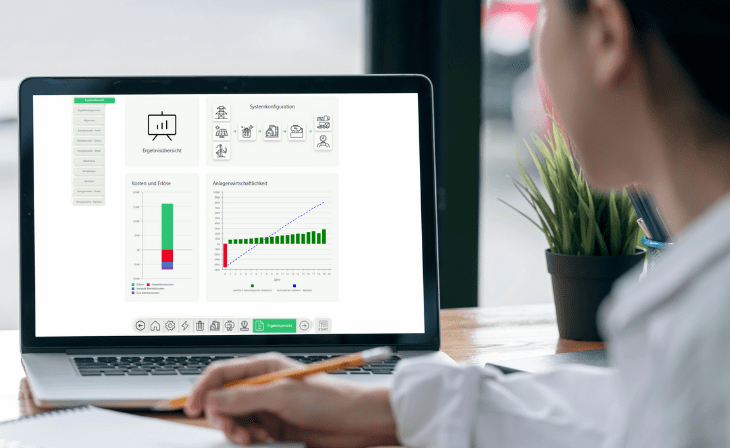
Financial planning can sometimes feel complicated, especially when it involves multiple income sources, expenses, savings goals, investments, loans, and changing economic conditions. Fortunately, online economic calculation tools can make many financial decisions easier to understand. These digital tools use formulas and user-provided information to produce estimates, comparisons, and projections that would otherwise require manual calculations.
Whether someone is managing a household budget, planning for retirement, evaluating a loan, or simply trying to understand how money grows over time, online calculators can provide useful starting points. They do not replace professional financial advice, but they can make everyday financial planning more organized and accessible.
Understanding Online Economic Calculation Tools
Online economic calculation tools are web-based calculators designed to solve financial and economic problems. They may focus on simple calculations, such as percentages and monthly payments, or provide more detailed projections involving inflation, compound interest, investment growth, taxes, or purchasing power.
The main advantage is convenience. Instead of creating formulas manually in a spreadsheet, users can enter a few numbers and receive an immediate estimate. This can be particularly helpful for people who are not comfortable working with financial formulas.
Different tools serve different purposes. Some calculate loan repayments, while others estimate savings growth or compare financial scenarios. Choosing a calculator that matches the question being asked is important because the results are only as useful as the assumptions entered into the calculation.
Simplifying Everyday Budgeting
A household budget is one of the foundations of financial planning. However, many people find it difficult to determine how much they can comfortably spend while still meeting savings goals.
Online calculation tools can help organize income and expenses. A budgeting calculator may allow users to enter housing costs, utilities, transportation, groceries, insurance, subscriptions, debt payments, and other regular expenses. The resulting calculation can show how much money remains available for savings or discretionary spending.
This can make financial planning more visual. Rather than looking at individual expenses separately, users can see how their spending categories affect their overall financial position.
Making Savings Goals More Practical
Saving a specific amount of money can be easier when the goal is converted into manageable monthly or weekly targets. Savings calculators can estimate how much needs to be set aside regularly to reach a particular financial objective.
For example, someone saving for an emergency fund can enter a target amount and desired timeframe. The calculator can then estimate the required contribution. Similarly, a person saving for a major purchase can compare different contribution levels and timelines.
These calculations can encourage realistic planning because they transform a large long-term goal into smaller steps.
Estimating the Impact of Inflation
Inflation is another important consideration in long-term financial planning. Money generally loses purchasing power as prices increase over time. A sum that seems sufficient today may not provide the same purchasing power several years from now.
Online economic calculation tools can demonstrate how inflation affects future expenses and savings. By entering an estimated inflation rate and timeframe, users can calculate the potential future cost of goods or determine how much purchasing power a certain amount of money may retain.
This information can be especially useful when planning for long-term objectives such as education, homeownership, or retirement.
Comparing Loans and Borrowing Costs
Loans are another area where online calculators can simplify financial decisions. A loan calculator can estimate monthly payments based on the borrowed amount, interest rate, and repayment period.
Users can also compare different scenarios. For example, extending a loan term may reduce the monthly payment but increase the total amount of interest paid. A shorter term may result in higher monthly payments but potentially reduce total interest costs.
Seeing these differences numerically can help borrowers understand the financial consequences of different repayment structures before making a commitment.
Evaluating Compound Interest
Compound interest can have a significant effect on long-term savings and investments. Unlike simple interest, compound growth allows returns to generate additional returns over time.
A compound interest calculator can illustrate how an initial amount may grow when interest or investment returns are reinvested. Users can adjust the starting balance, contribution frequency, estimated rate of return, and timeframe to explore different scenarios.
These calculations demonstrate why consistency and time can be important elements of long-term financial planning.
Supporting Investment Planning
Investment calculators can also provide useful educational estimates. Someone considering regular contributions to an investment account can enter different contribution amounts and projected rates of return to see how hypothetical balances could change over time.
These results should always be treated as estimates rather than guarantees. Investment returns can fluctuate, and actual outcomes depend on market conditions, fees, taxes, and other factors.
Nevertheless, calculators can help users understand concepts such as regular contributions, compound growth, and the potential effect of starting earlier or saving more consistently.
Improving Retirement Planning
Retirement planning involves many variables, which makes it particularly suitable for calculation tools. Retirement calculators may consider current savings, regular contributions, expected investment returns, retirement age, estimated expenses, and inflation.
By adjusting these inputs, users can explore different hypothetical scenarios. For example, they may compare the potential effect of increasing monthly contributions or delaying retirement.
The value of these tools is not that they can predict the future. Instead, they help people identify assumptions and think about whether their current savings strategy aligns with their broader goals.
Making Financial Decisions More Data-Driven
One of the biggest benefits of online calculators is that they encourage people to work with numbers rather than relying entirely on assumptions. A person may believe that a particular loan payment is affordable or that a savings target is achievable, but entering the figures into a calculator can provide a clearer perspective.
Users can also compare multiple scenarios. Changing one variable at a time makes it easier to understand which factors have the greatest effect on the final result.
This approach can make financial planning more structured and reduce the complexity of everyday calculations.
Understanding the Limitations of Calculators
Although online financial calculators are useful, they should not be treated as perfect predictions. Results depend heavily on the information entered by the user and the assumptions built into the calculator.
Interest rates can change, investment returns are uncertain, inflation can vary, and personal circumstances may develop differently than expected. Taxes and fees may also affect real-world outcomes.
For this reason, calculators are best used as planning and educational tools. When making significant financial decisions, users may benefit from checking calculations carefully and consulting a qualified financial professional when appropriate.
Creating a More Organized Financial Plan
Online economic calculation tools can make financial planning easier by turning complicated formulas into accessible estimates. From budgeting and savings goals to loan comparisons, inflation calculations, investments, and retirement projections, these tools can help users understand how different financial choices may affect their future.
The most effective approach is to use calculators as part of a broader financial planning process. Start with accurate information, test multiple scenarios, review the assumptions, and update calculations as circumstances change.
Financial planning does not have to involve complicated mathematics every time. With the right online economic calculation tools, individuals can gain a clearer understanding of their finances, identify practical goals, and make more informed decisions about managing money over the short and long term.